Dance Central: Finding the fun on a deadline
Bringing a Kinect launch title to market with Microsoft, on a launch date we didn't set: finding the fun, fast, while the camera itself was still being invented. Then two sequels that took it to parties.
At a glance
- Situation
- Dance Central was one of the first games for Kinect, built in parallel with the hardware. What the camera could see changed from day to day, and the game depended on reading a dancer's whole body.
- Task
- Help the team get the most from Kinect without fighting its limits, then make the series easier to learn, fun with friends, and welcoming to beginners.
- Action
- Researched how people learn to dance, mapped what the camera could see with QA and Microsoft, and helped replace rigid detection with machine learning trained on real players. Later, standardised how every routine was evaluated, and studied group play in a living-room lab.
- Result
- A bestselling Kinect launch title, two sequels praised for their motion detection and player experience, and High-Five to Join, a gesture that solved who's playing at a party.
A game built alongside its own camera
Dance Central let players learn and perform dance routines alongside the game's characters, across hundreds of songs, with difficulty for both experienced dancers and complete beginners. It was built for Kinect, Microsoft's new camera, while the camera was still being built.
The platform defined the gameplay, and its capabilities changed from day to day. Every design decision rested on questions nobody had answered yet: what can Kinect see, what kinds of moves do people enjoy or avoid, and how do you learn a routine and then perform it?
Work with the camera, not against it
Get the most from Kinect without struggling against its restrictions, give Microsoft feedback that would improve detection, and make sure the dancing still felt like dancing.
From the dance studio to the living room
Learn how people learn to dance
I researched dance classes to understand how people learn different styles and moves, and how they go from learning a routine to performing it. That shaped how the game taught routines and which moves made the cut.
I also brought my own experience. I'd been a dedicated dancer and gymnast as a kid and a teenager, so I knew first-hand how people learn moves and where they usually struggle, and I drew on that through prototyping and playtesting. It was a happy accident to land in a job where it was useful.
Map what the camera could see
I encouraged developers to play with the hardware as much as possible, worked with QA to catalogue and profile Kinect's performance, and worked with design on solutions wherever gameplay and hardware didn't mesh. I collaborated with Microsoft on early versions of the hardware and firmware, feeding back what we found.

Let real players define a move
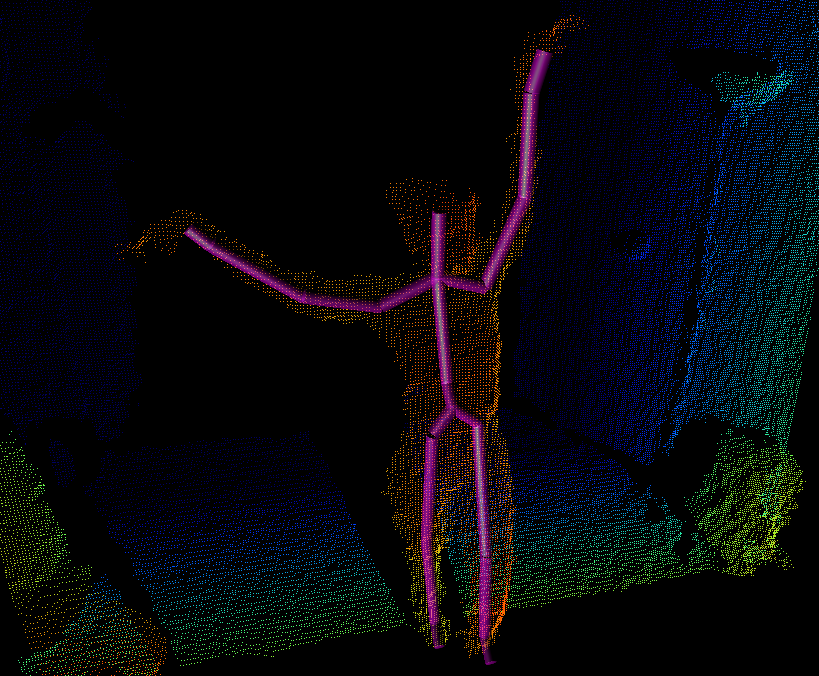
Approaching alpha, the motion detection was too hard to pass, even for the choreographers who'd made the routines. It treated a move as a precise shape at a precise moment, with no room for body language, rhythm or the fun of dancing. I spoke up because I knew from experience that even excellent dancers never move identically.
In the final weeks, the team replaced it with a machine-learning system built from dozens of real player performances. I seeded and nurtured that motion data: teaching a clumsy robot to understand the subtleties of human body language.
Evaluate every routine the same way
The first game set a standard workflow for creating routines. For Dance Central 2, I designed the matching evaluation cycle: every song playtested, revised and retested before release. Detection became more flexible, and its idea of a dance move was grounded in what real players did.
I also researched how new and returning players learn and memorise moves, which fed a much better practice mode where players could rewind or skip a move by gesture or voice, and monitored detection for problems that only appeared with two dancers.
Take it to the party
Multiplayer brought in groups of friends, so Dance Central 3 added party modes, quick minigames and a very easy difficulty. We studied group play the way people really play: a lab set up as a living room, with a sofa and coffee table, and testers who brought their friends and took turns.
The hardest problem was who was dancing. Kinect tracks two players and struggled with a crowd in view. The answer was High-Five to Join: any two people who faced the camera and clapped hands became the players, and they were usually friends. My part included evaluating minigame mechanics, writing user stories for casual and first-time players from discovery to mastery, tuning the lowest difficulty for beginners, and planning evaluation milestones with our partner studio.

A launch hit, and a series that kept growing
- 2.5 millioncopies of the Kinect launch title, built in parallel with the hardware (Wikipedia).
- Award-winningacross the series, with the sequels praised for their motion detection and player experience.
- High-Five to Joina single, friendly gesture that told the camera who was playing.
Some of the awards the series won:
- Dance Central: Family Game of the Year at the 2011 Interactive Achievement Awards (Wikipedia); Best Original Game and Best Motion Simulation Game at the 2010 Game Critics Awards (Kotaku).
- Dance Central 2: GameRevolution's Best Motion Control Game of 2011 (GameRevolution).
- Dance Central 3: nominated for Family Game of the Year at the 2013 D.I.C.E. Awards (Wikiwand).