Creator Discovery
Giving brands the tools to find, judge and invite the right creators themselves, as Vamp moved from a full-service agency to a self-serve platform.
At a glance
- Situation
- Brands could see only a creator's handle, and only after that creator applied. Choosing well took hours, and poor picks cost campaign performance.
- Task
- As Head of Product, let brands discover and assess creators on their own for the first time, without adding load to the delivery team.
- Action
- Studied the delivery team's workarounds and competitor tools, sliced a lean three-part MVP (search, profiles, invites), auto-filled profiles from social platform data, and ran a staged, cross-team launch.
- Result
- About 80% of active creators updated their profiles ahead of launch. Late requests for recruiting help nearly stopped, and the delivery team moved most recruiting onto the platform.
Brands were choosing creators blind
On the platform, brands saw a creator's handle and a link to their social profile, and only once that creator had applied to a campaign. Sorting the good fits from the rest meant hours of clicking out to social channels. A poor pick cost time in delivery, and the content usually performed worse.
Inside, our team relied on competitors' tools
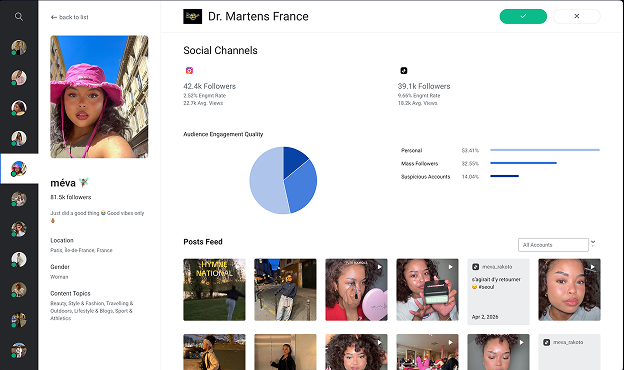
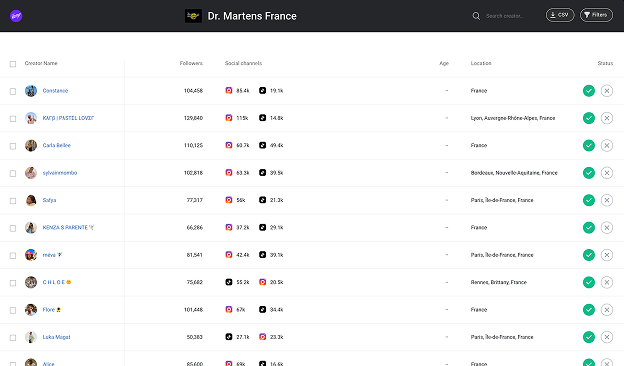
I sat with the Campaign Delivery team to learn how they found good creators. They used paid third-party tools to search a brand's niche, compared audience stats and style, then recruited people through social DMs. Nobody checked whether a creator was already on Vamp, because there was no easy way to. Those tools were costly, and as direct competitors they could cut us off.
Outside, customers stalled or left
Self-serve customers often skipped the step, then asked our team to do it late. That earned short-term service fees but jammed the delivery team and hurt quality and margins. Customers who did have the skills and tools realised they didn't need us, and churned.
Make creator selection self-serve
The brief was to let brand users evaluate creators on their own for the first time: find people who fit a campaign, understand what each would bring, and invite them directly. It had to work for new self-serve customers and also win over our own delivery team, whose workflow it would change most.
Research, slice, then launch in step
Learn from the tools people already trusted
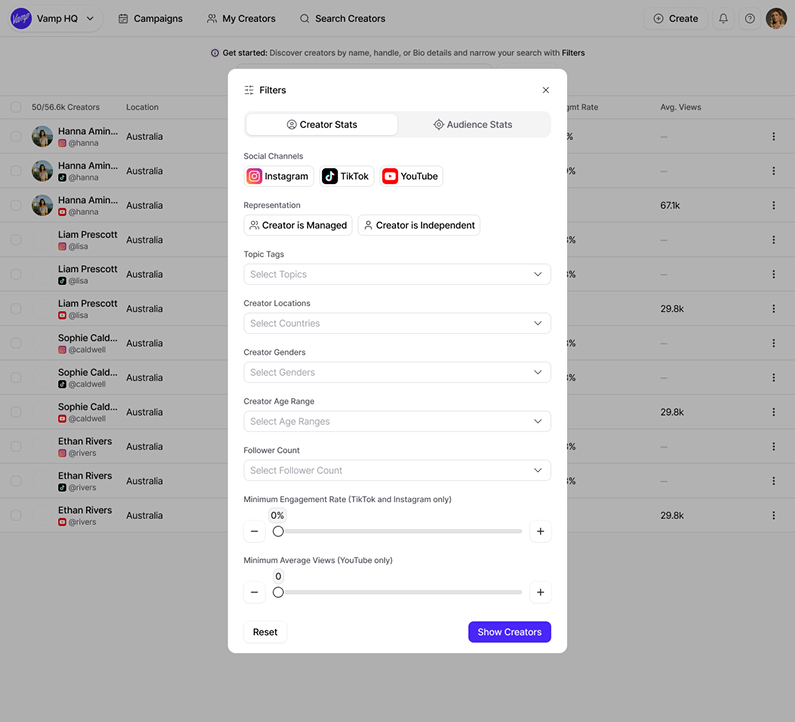
The team's favourite tool narrowed millions of creators to those matching set demographics and showed key audience numbers at a glance. Its other flow, exporting a shortlist for the client, depended on foundations we didn't have yet, so I sequenced it later.
Map what we had, needed and could get
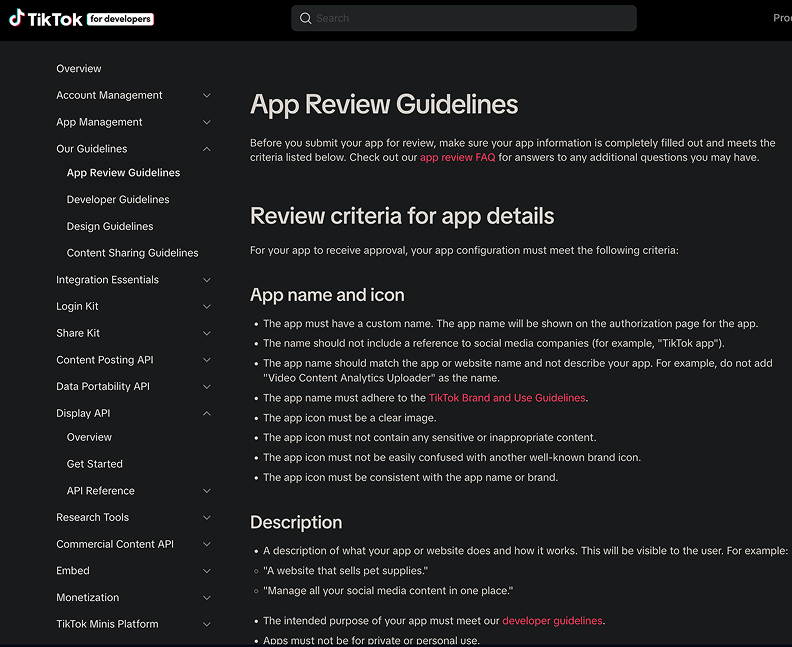
This was Vamp's first product build at this scale. With the engineering leads, I marked which UI already had standard components so we could start fast, and we read each social platform's API docs to see which data points profiles could carry. That effort-versus-impact picture paid off later when we prioritised each feature.
Slice to the leanest end-to-end journey
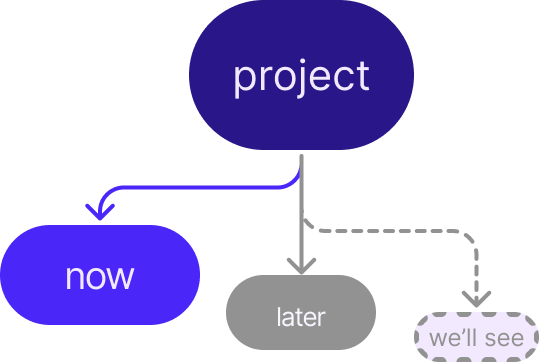
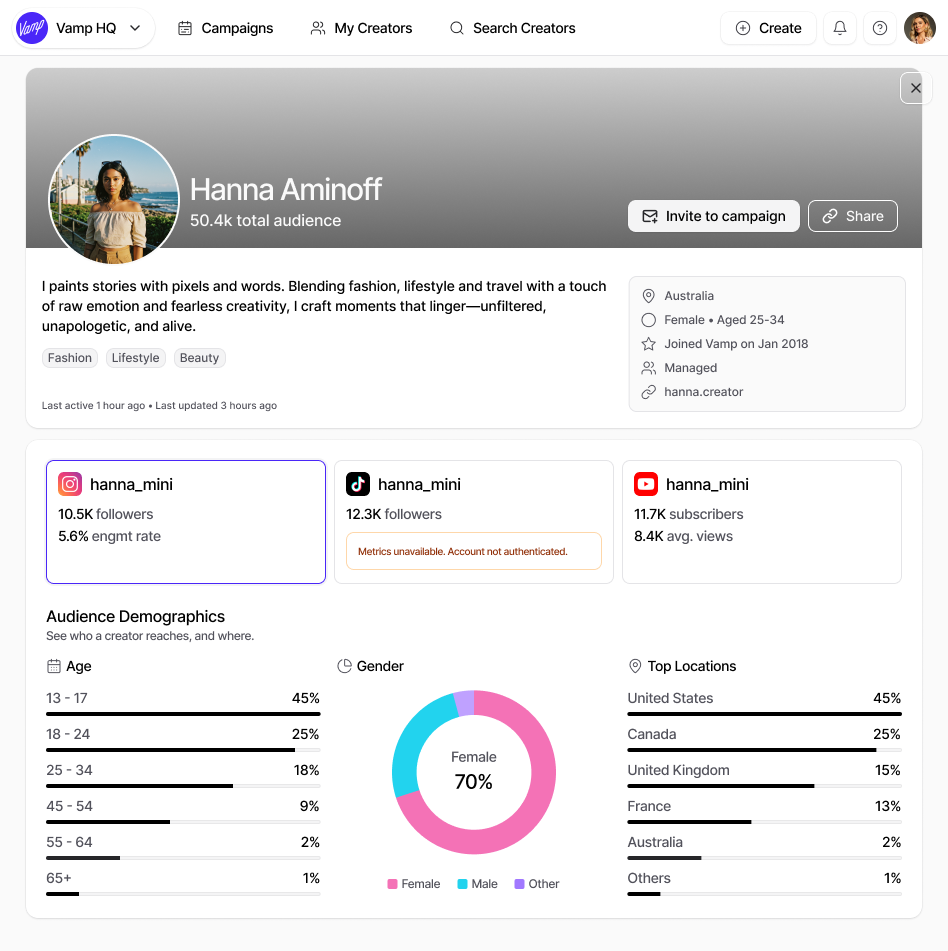
I split the work into three jobs: search for creators, view their profiles, invite them to a campaign. Under each I mapped the possible stories, cut everything not needed to complete one chain, then negotiated pieces back where a workaround would cost more than the build. In a company still learning product development, I kept the cut list visible, so everyone could see what was in, what was out and how later slices would be chosen.
We kept a small space for delighters for our own team, such as pasting a spreadsheet column straight into the invite box. With strategy focused on self-serve, it showed the delivery team their needs still counted, and it helped every power user.
Lower the risk of a cold start
Search only works if profiles hold data, and creators might adopt slowly. So we auto-filled profiles from their public social data, and built from existing components wherever we could, polishing only the patterns we expected to reuse. New screens sat comfortably beside old ones while still feeling like an upgrade.
Build the team's habits as well as the feature
Engineering was new to working this way, so I partnered with the CTO on how the team built: each epic had a different lead developer, and the whole team swarmed each build. People practised new skills with support, and spotted reusable patterns across the three features.
Release in step across the company
We shipped each feature quietly as it was ready, so we could respond one piece at a time. That gave creators time to curate their new profiles, and those who did got a boost in search results. Before the full launch, I brought Support, Campaign Delivery and Account Management together so their messaging matched.
Brands chose for themselves, and our team got its time back
- ~80%of active creators updated and curated their new profiles before launch.
- Near zerolate requests for recruiting help, down from a regular drain on the delivery team, with knock-on gains in retention.
- In-platformCampaign Delivery moved nearly all of their recruiting onto Vamp, needing outside tools only for niche searches.
Brands praised the features unprompted in interviews and surveys. Because searches and profiles could be shared by link, our team built client shortlists from them, which showed us how native list-building should work.
Foundations for what came next
The search filters were built to be reused when brands wrote campaign briefs, so matching data could screen applicants automatically. The invite flow gave creators a faster route onto the platform, and our team a recruiting tool of its own.
In 2026, after a change of leadership, Vamp chose to return to their roots as a service agency, and I moved on before the self-serve goal could be proven at scale. The role story covers the full arc and what we learned.