Proactive drug warnings
A drug library that speaks up, like a detective's sidekick, when a patient's symptom might be a side effect of their medication.
At a glance
- Situation
- Medical Director owned a vast library of drug information, but doctors had to look things up. A patient on long-term medication might arrive with a vague complaint that was really a side effect.
- Task
- Make the library act on its own, surfacing relevant information at the moment a doctor needs it.
- Action
- Trained a parser on drug monographs to list each drug's side effects, matched them against each patient's prescriptions, and designed a flag that leads straight to the evidence.
- Result
- A full interactive prototype in which a symptom typed into a consult flags its likely cause.
A library you have to remember to open
A Medical Director subsidiary held a large library of information about medicines and treatments. Like most reference libraries, it waited to be consulted. A common scenario: a patient on medication for a chronic illness develops a side effect, and arrives with unclear complaints. Could the system connect the dots?
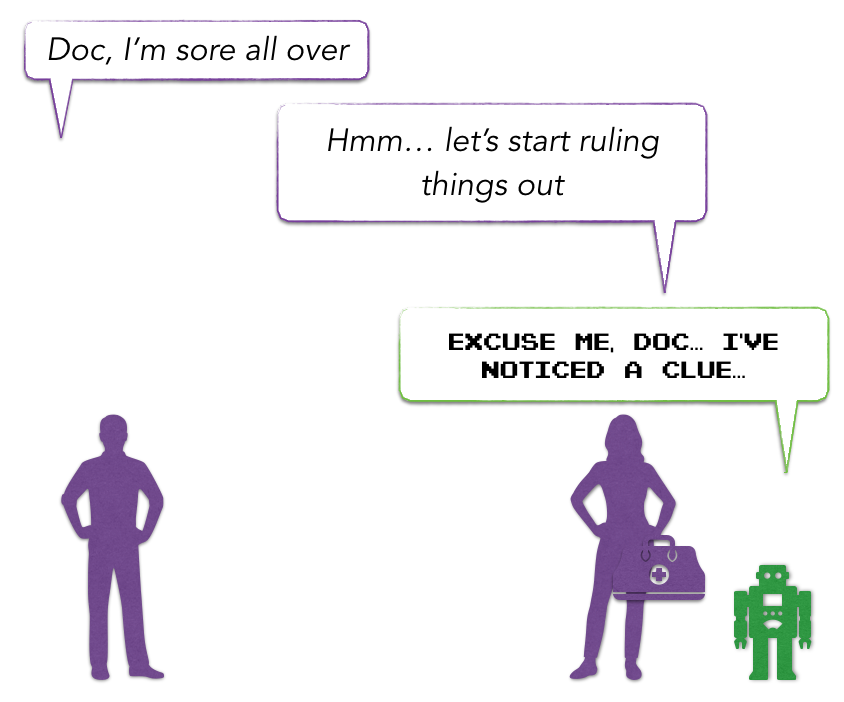
Make the information find the doctor
Make the library act on its own, surfacing the right information when a doctor would want it, without adding work to the consult.
Read the monographs, then match them to the patient
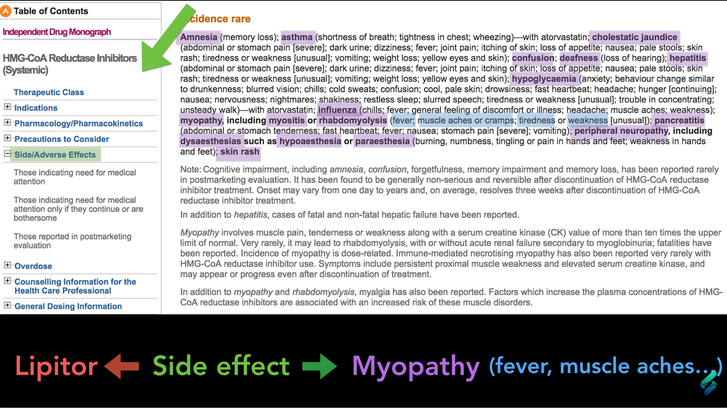
Teach the system to read drug monographs
A drug monograph is a structured record: what the drug treats, how it works, and its side effects. We trained a semantic parser to find medically significant terms in each one and link related elements, building an indexed list of possible side effects for every drug. That list is then matched against the record of any patient prescribed the drug.
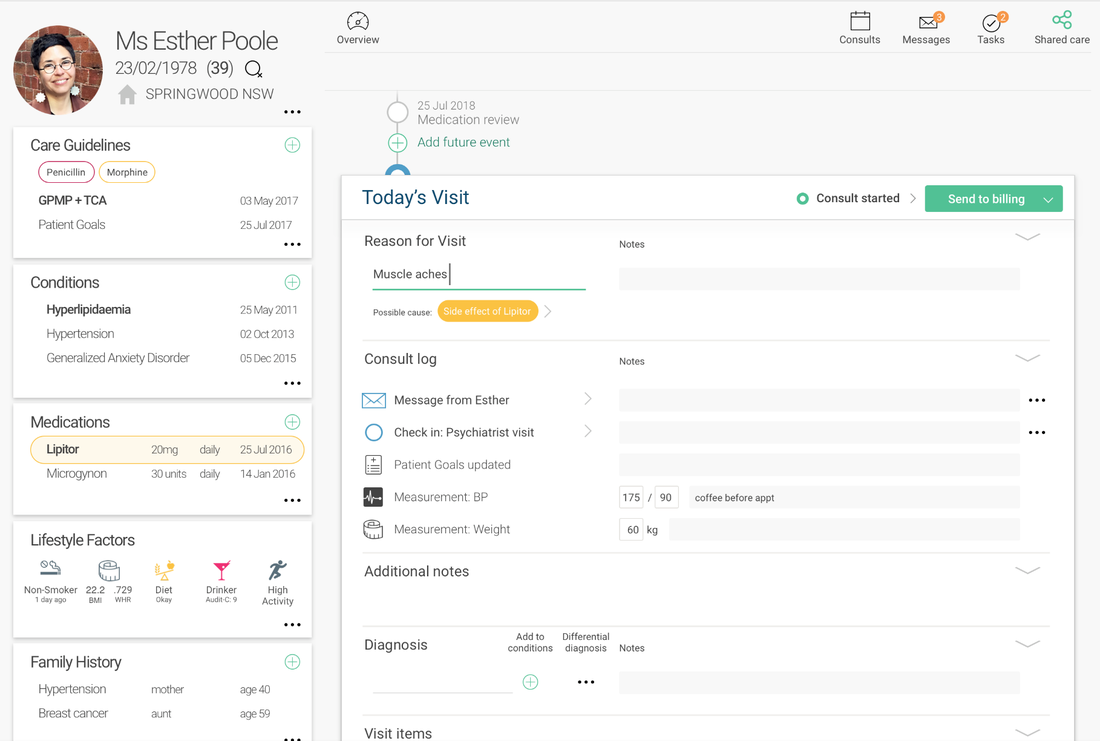
Flag it in the consult
When a doctor records a symptom that matches, the system raises a flag naming the likely cause, and highlights the related parts of the patient's record.
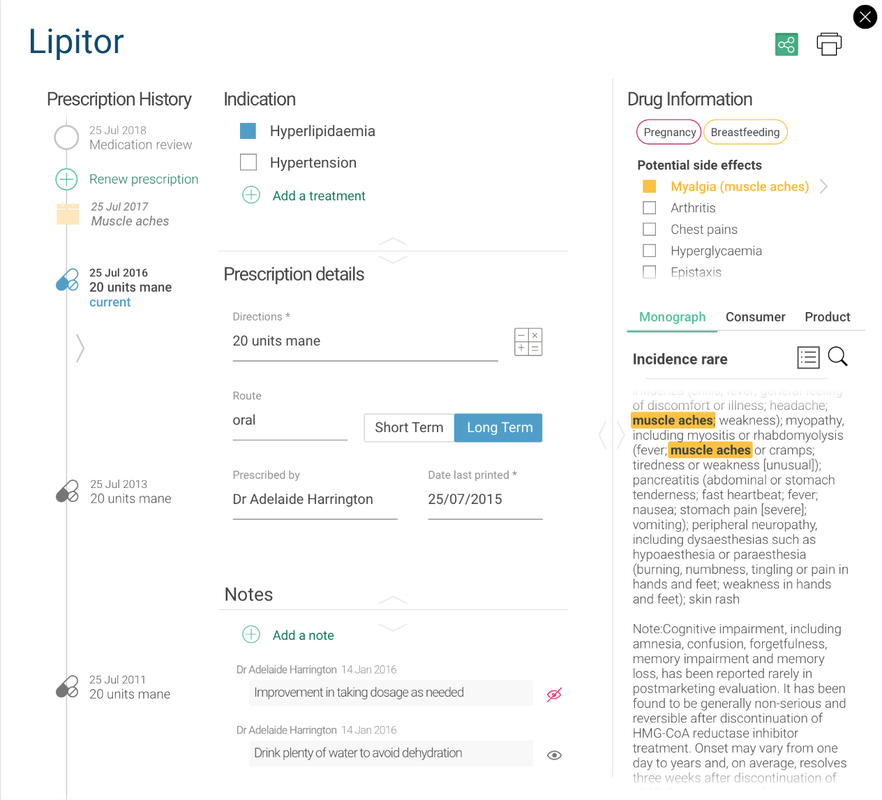
Lead straight to the evidence
Selecting the flag opens the drug's details, the patient's history with that prescription, and the full monograph, already open at the relevant section.
A library that speaks up
- Full prototypeof the flow, from symptom to flag to evidence.
- Reusablelinks between drugs and effects, also feeding self-building care plans.
- TestedShown to GPs as a prototype. Useful for exploring what the drug library could do; the roadmap went to more immediate priorities.
Where the concepts led, and what they taught me, is in the Medical Director story.