Medical Director: Helix
On a design team built from scratch, I researched how GPs really work and showed what their records could do for them, helping a legacy software company reimagine their flagship product.
The role at a glance
- Business
- Medical Director, an Australian medical software company, building Helix: a cloud-based clinical and practice management platform for general practice, focused on connectivity, patient engagement and data-driven insight.
- Hired to
- Join Helix, a team set up to renew an established company from within, and find new uses for assets the business already had, like its clinical references and drug library.
- Key wins
- Ethnographic research with GPs, a journey map that shaped the roadmap, four concept tools exploring what record data could do, and a VR vision film shown at the national GP conference.
- Moved on
- In 2017, to Hireup, as product designer at a fast-growing disability support marketplace.
A legacy leader, reimagining its product
Medical Director's software has long sat on GPs' desks across Australia. Helix was its next generation: one cloud platform for running a practice and caring for its patients, with scheduling, billing, prescribing, clinical reference and records in one place. The company built a new design team from scratch to help them move from a legacy product toward design- and product-led work.
Research the customers, spread the thinking
My role was to understand GPs and their teams deeply, and to bring design thinking to the wider organisation: running multidisciplinary workshops, researching customer behaviour, turning a large body of knowledge into feature designs, and representing the work at industry conferences.
From the consulting room to the roadmap
Watch GPs at work
I ran ethnographic studies in practices to find pain points nobody had addressed, and co-design workshops to explore directions and evolve product concepts. I created customer journey maps and personas for a reimagining of an established product.
Show what passive data could do
Patient records hold far more than a busy GP can read. I designed concept tools that put that data to work: a patient's history at a glance, care plans that build themselves, and drug warnings that surface on their own. Each became an interactive prototype for internal and external testing.
Bring the whole business along
I worked with stakeholders across the business to use services from every division, and with the UI development and product teams to streamline delivery. I aligned features, design priorities and the development roadmap with what we'd learned from users.
Make the future tangible
To share our vision with customers, I conceived, storyboarded and produced a 360-degree VR film of a GP practice in 2021, made with a creative agency and shown at the national GP conference.
The work, in detail
-
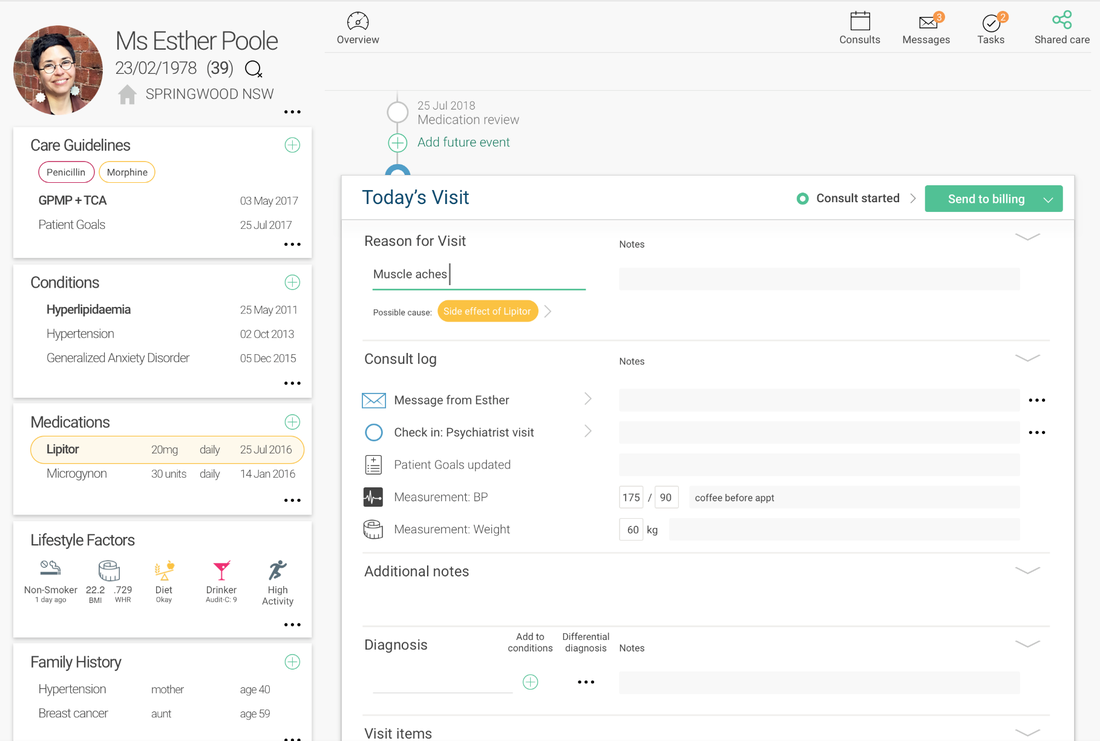 Proactive drug warnings
A drug library that speaks up when a patient's symptom may be a side effect.
-
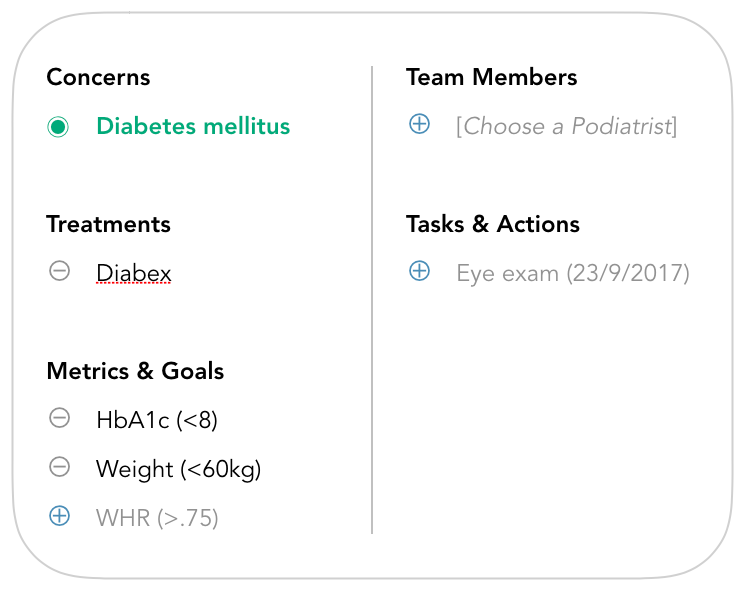 Self-building care plans
Care plans for chronic illness that assemble themselves and show each person only their part.
-
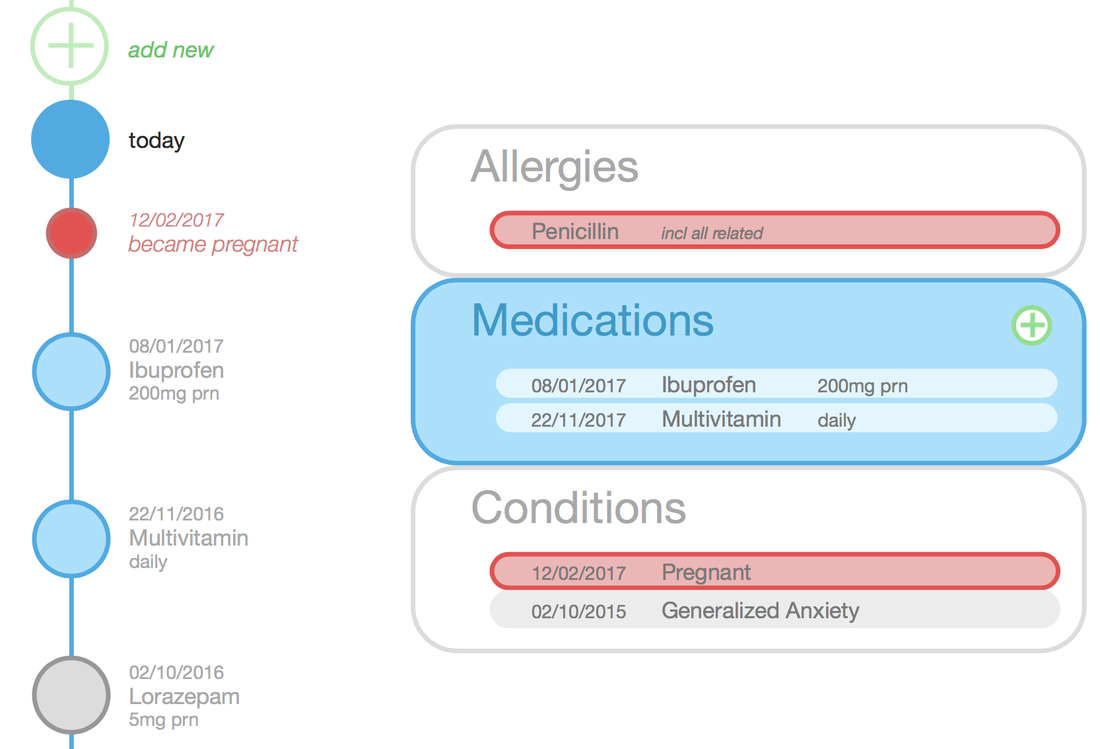 Patient timelines
Who is this patient, and what matters today? A history a GP can read in seconds.
-
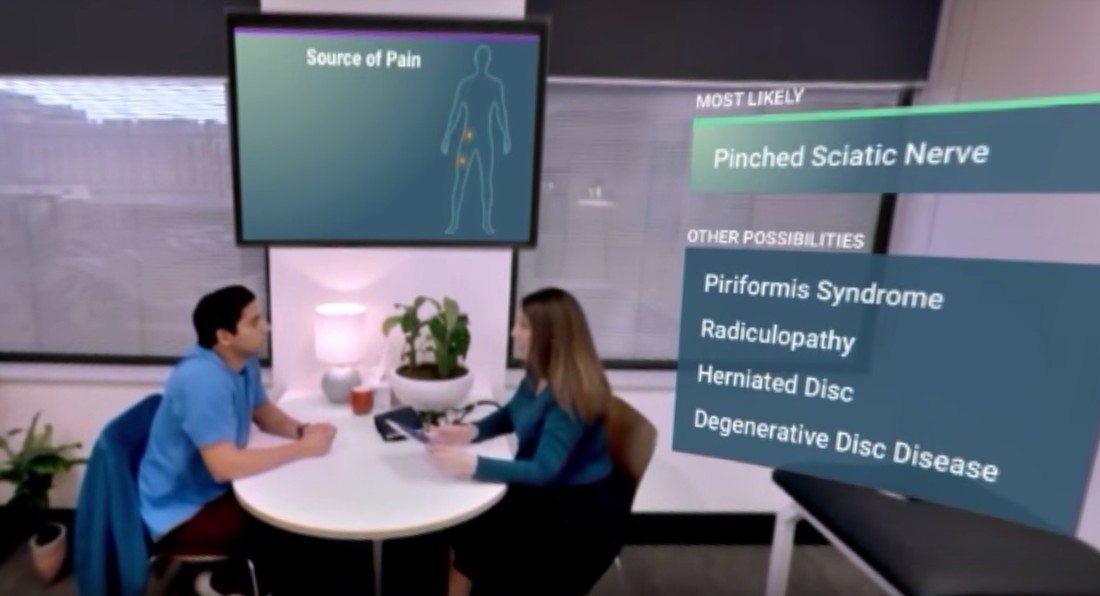 2021: A GP Odyssey
From a journey-mapping workshop to a 360-degree VR film of the near future, for the national GP conference.
What the concepts showed
The concept tools were useful explorations of what the product ecosystem could do with the building blocks it already had. In the end, the roadmap put build time into work that was more immediately relevant and commercially applicable for existing customers, and the concepts stayed concepts.
They taught me something too. GPs are busy, so concepts were usually built first and shown to doctors after. When we showed them, the response was often that a tool wouldn't save them enough time, or that they'd rather trust their own judgement.
It stretched me creatively, designing within real constraints like "make a product from this drug library". And it shaped the way I've worked ever since.
What I took with me:
- Never design in an ivory tower. Bring customers in from the start, and if they're too busy, make it worth their while.
I moved on in late 2017 to Hireup, a fast-growing disability support marketplace, as their first product and design specialist. Nine years later, at Coviu, I did it the other way round: research first, with every project grounded in what customers needed.